Federico Faggin was born in Vicenza. (1, December 1941)
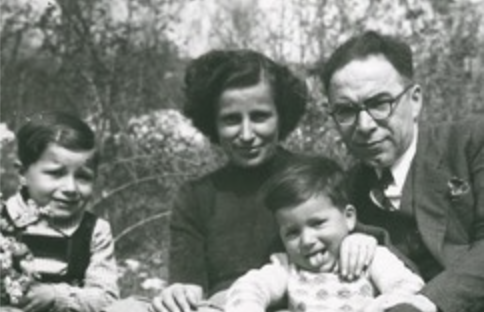
1944
Federico’s parents, Emma and Giuseppe, with Giorgio (left) and Federico, at Isola Vicentina.
THE STORY OF FEDERICO AND ELVIA FAGGIN… SO FAR
1941
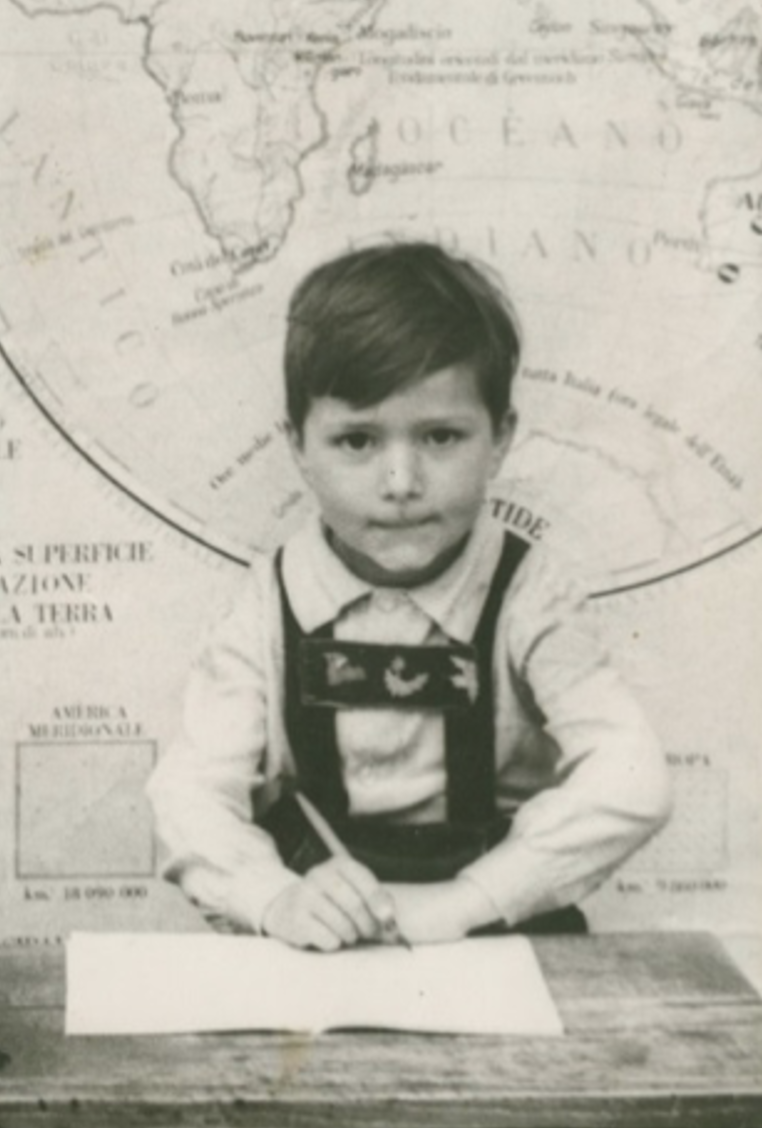
1947
Federico in first grade at Isola Vicentina.
1956
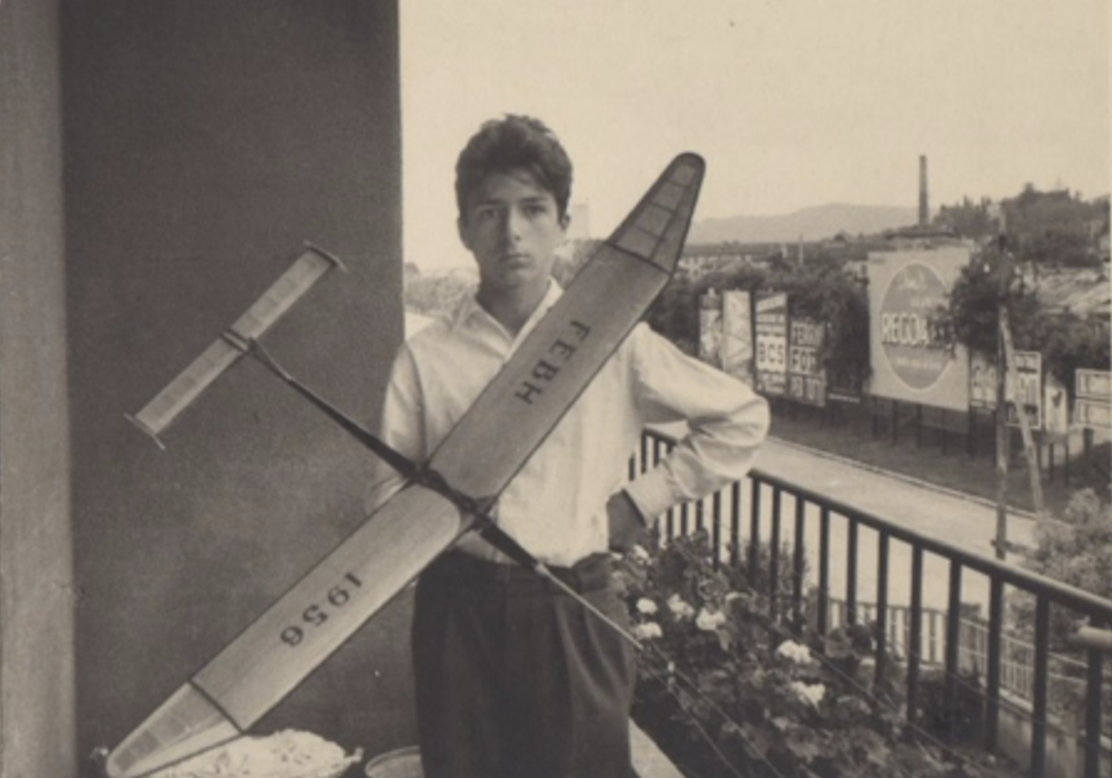
Federico at 14 with a contest model plane he designed and built.
1961
1965
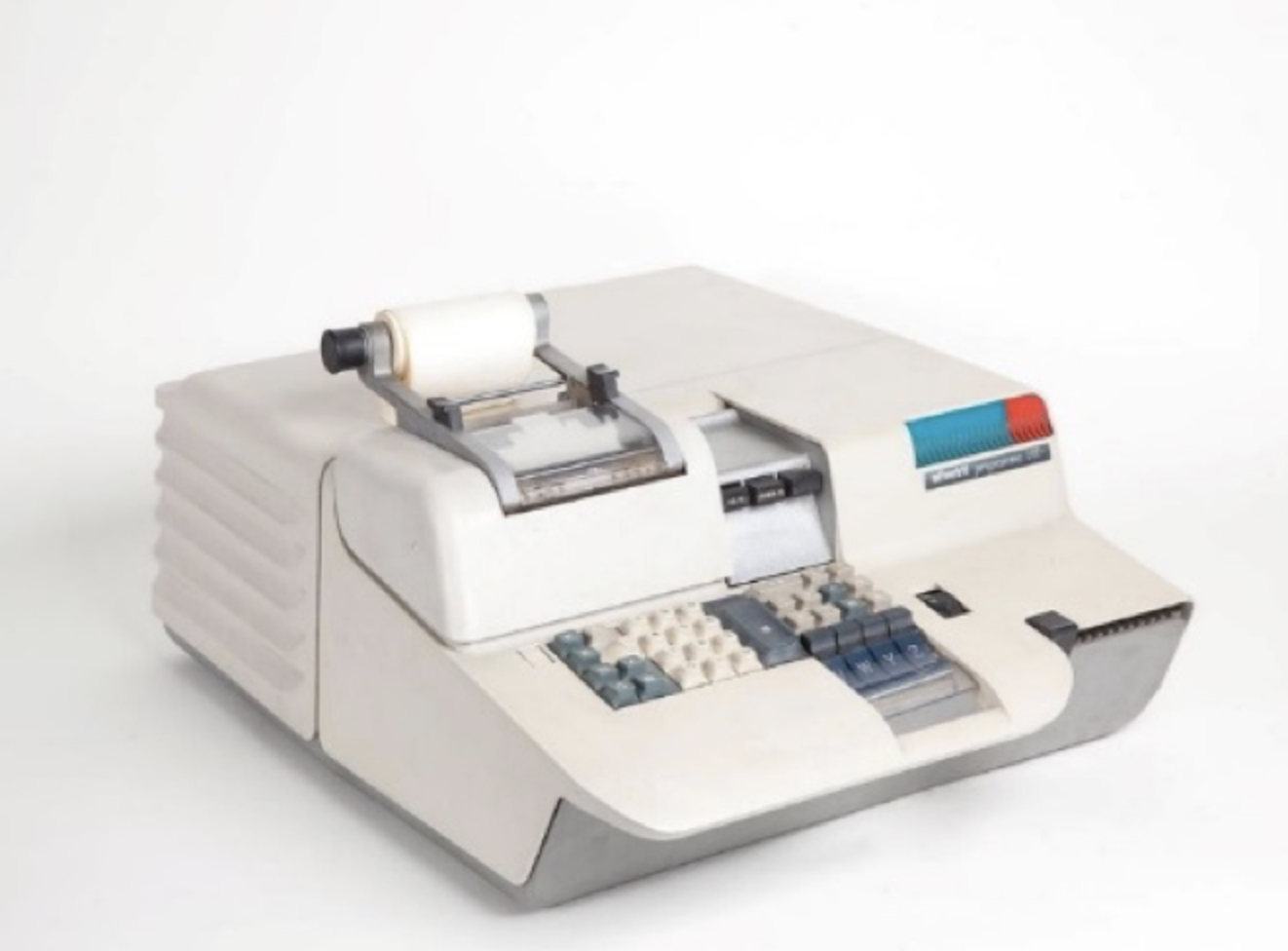
The Olivetti Programma 101, the world’s first programmable desktop calculator. Introduced in the market in 1965, it contained a small computer made of discrete components and demonstrated the value of programmability – only possible with a computer – in a personal calculator.
1966
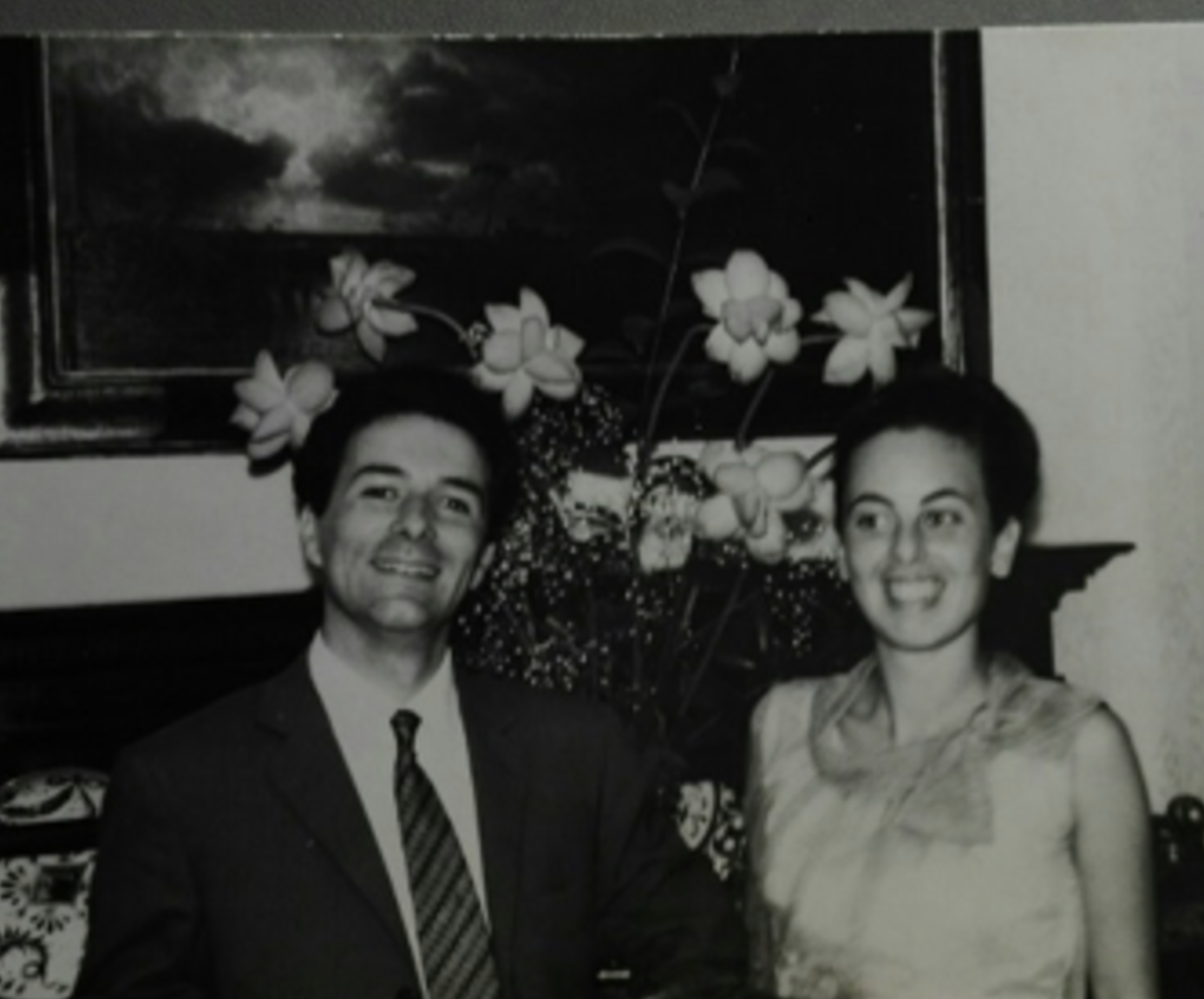
Elvia and Federico celebrate their official engagement.
1967
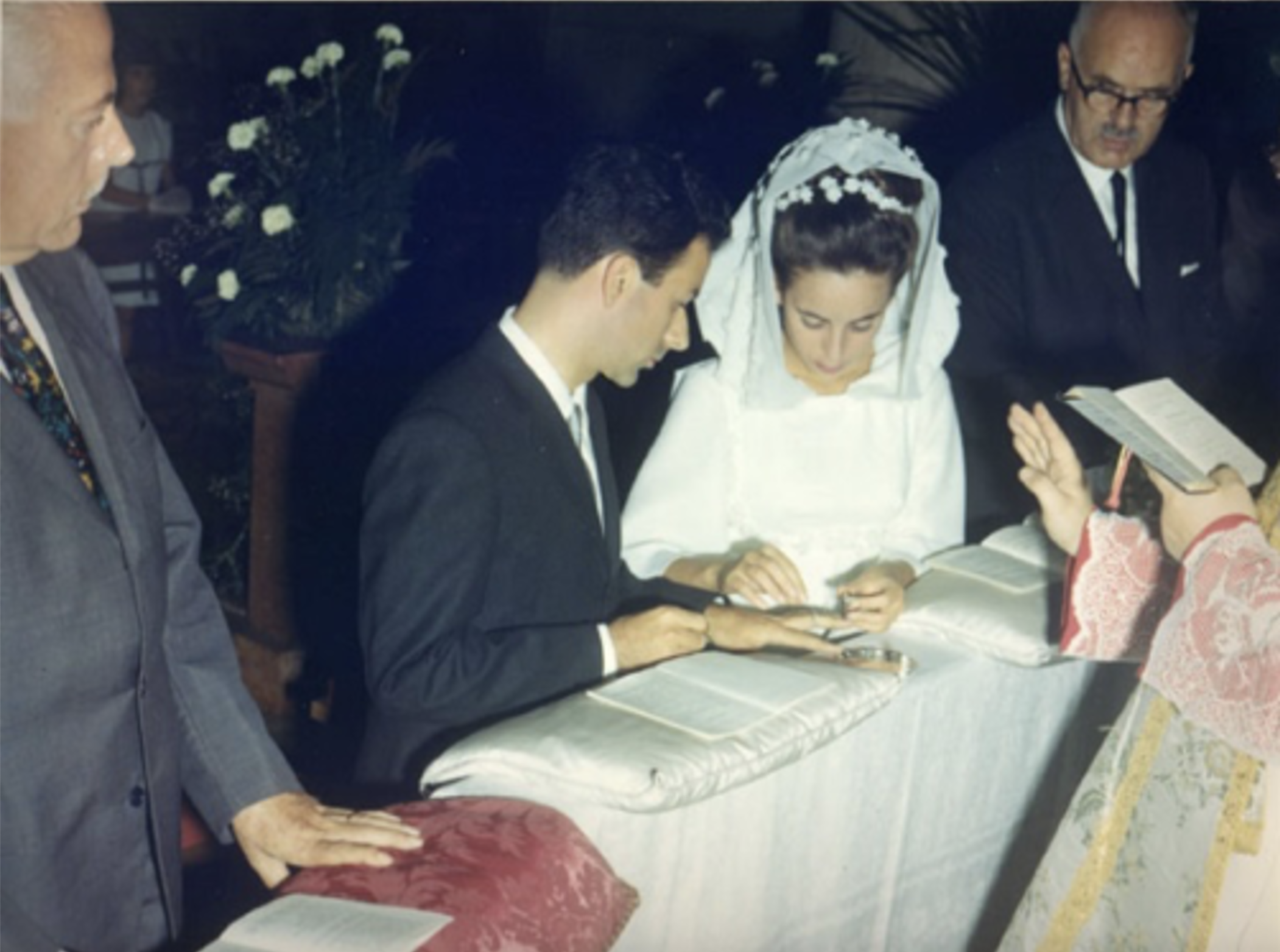
Elvia and Federico’s wedding day
1968
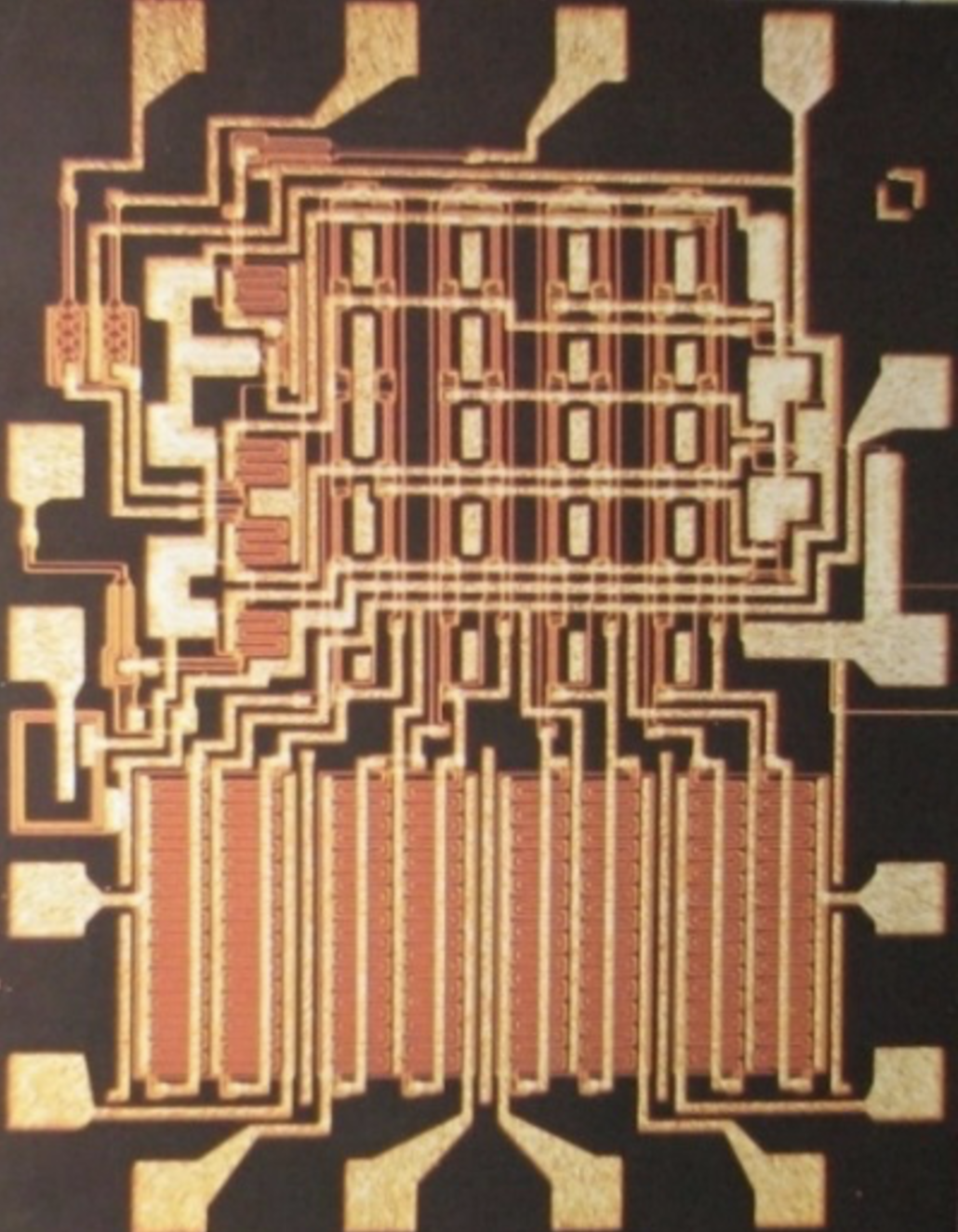
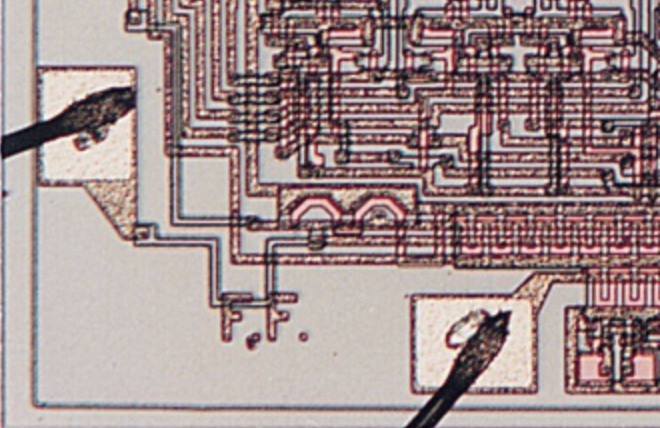
The Fairchild 3708, the world’s first commercial MOS IC with SGT, first sold at the end of 1968. The 8 big transistors with serpentine gates are the analog “switches” described in the text.
1969
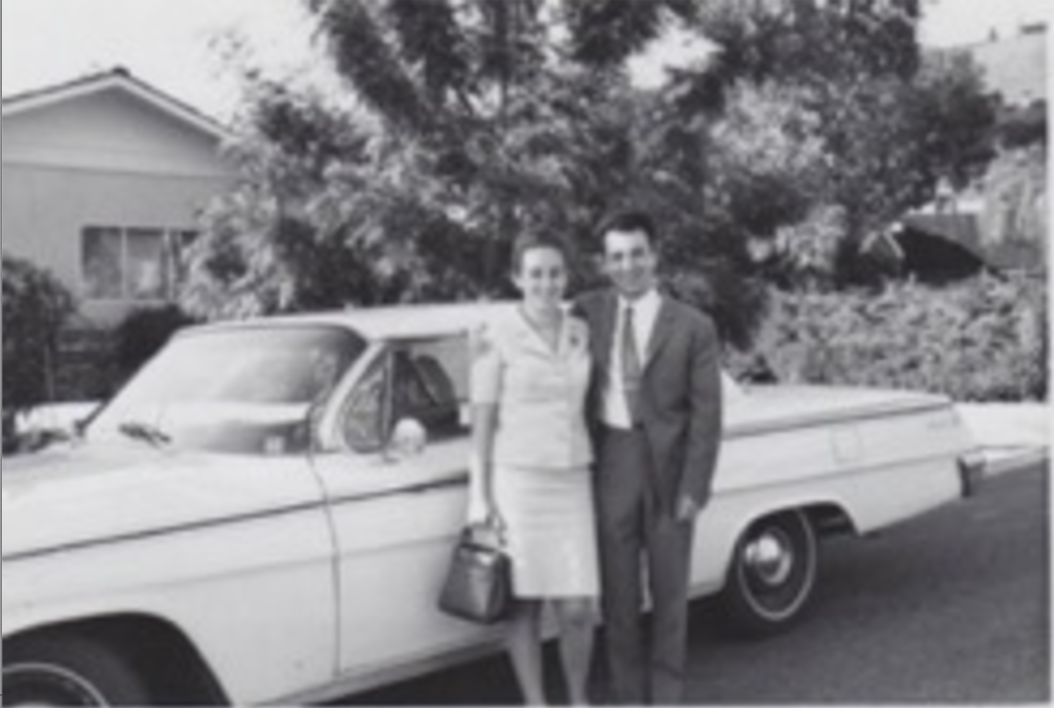
Elvia and Federico in 1969 with their first car, a 1962 Chevrolet Impala in Cupertino, CA.
1970
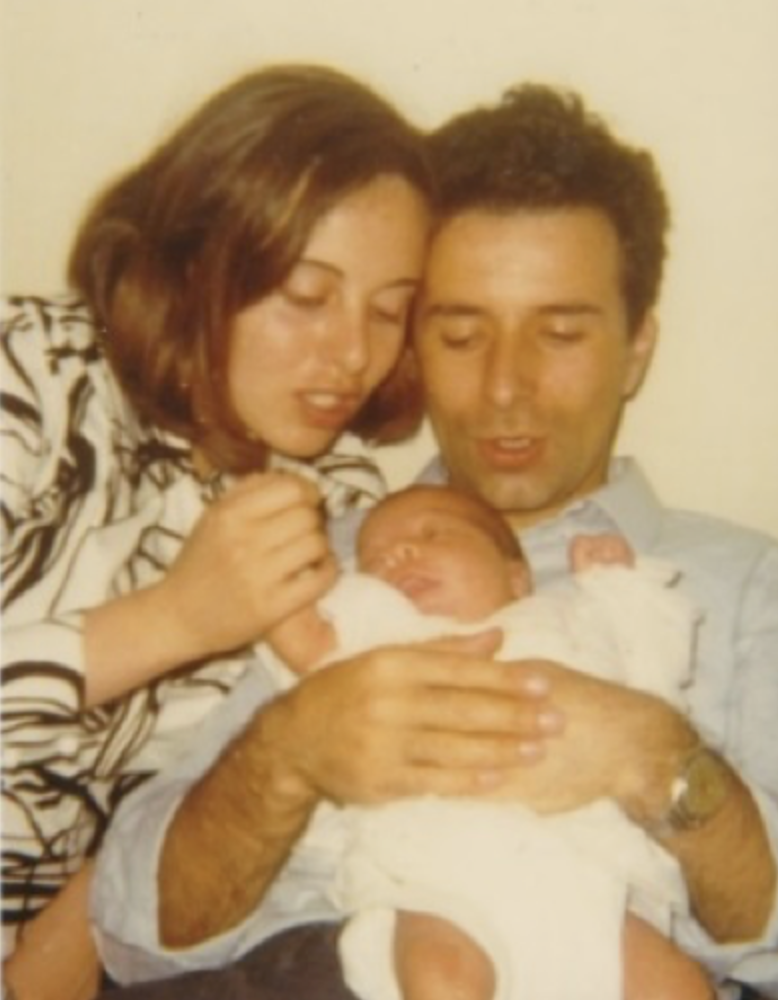
Marzia and her happy parents in Cupertino.
1969
The first CPU-on-a-chip in the world: The Intel 4004. This 4-bit microprocessor contained about 2300 random-logic transistors. The instruction cycle used 8 clock periods of a 2-phase clock at 750 kHz, lasting 10.7 microseconds. The typical power dissipation was 750 mW.
1971
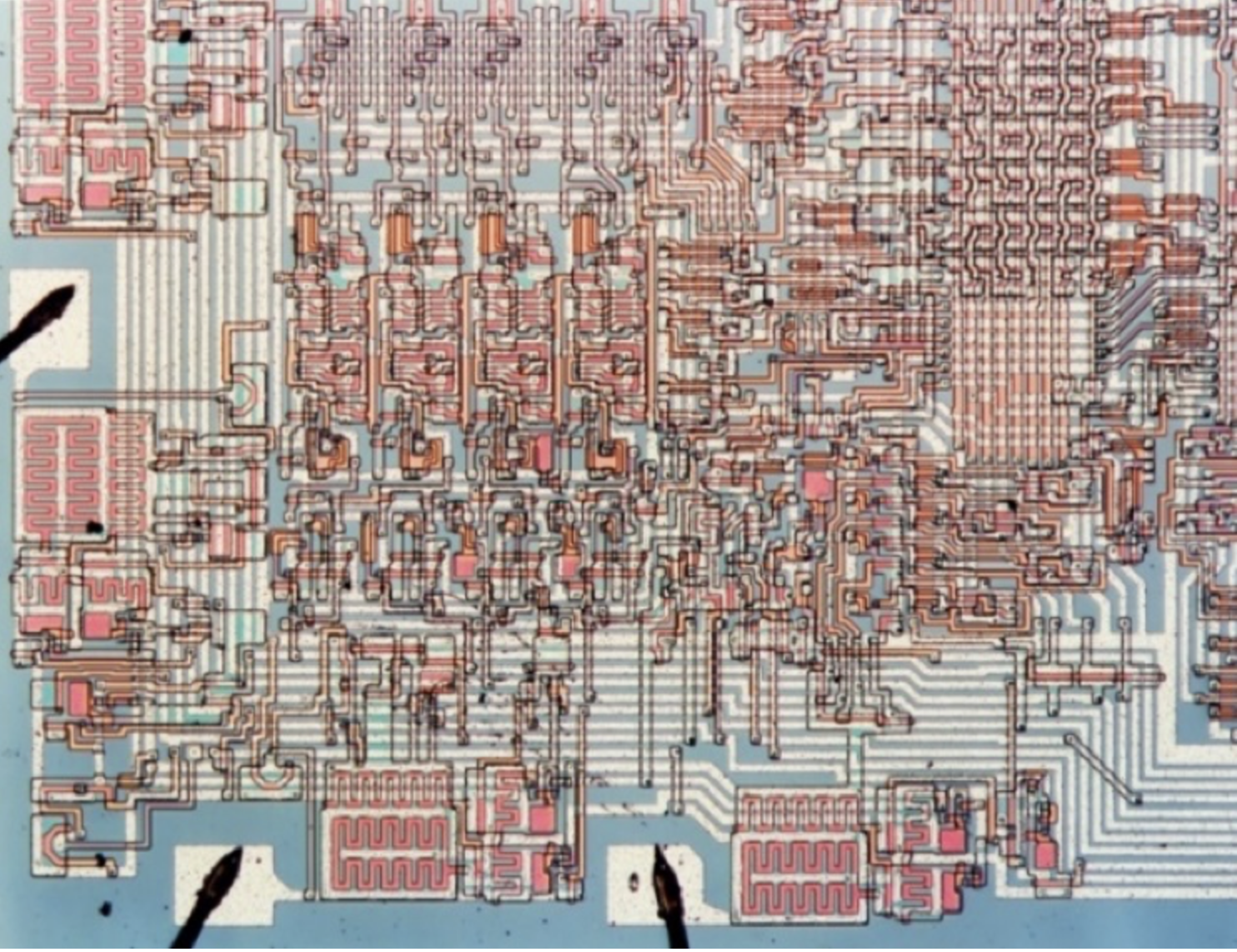
This image shows a portion of the layout of the 4004 with the arithmetic unit in the center and two powerful data bus drivers at the bottom of the photo. The MOS transistors with the orange serpentine are the gates of the push-pull drivers of the external 4-bit bus which had to drive a few hundred pF of capacitance; a very high value for the MOS transistors of that time (1970). On the right of the image, there is a portion of the control logic of the arithmetic unit. Note the high layout density made possible by the buried contacts. The logic circuits were almost all buried with the signals in metal running over the logic. The 4004 was the only circuit of the 4000 family to use buried contact.
1972
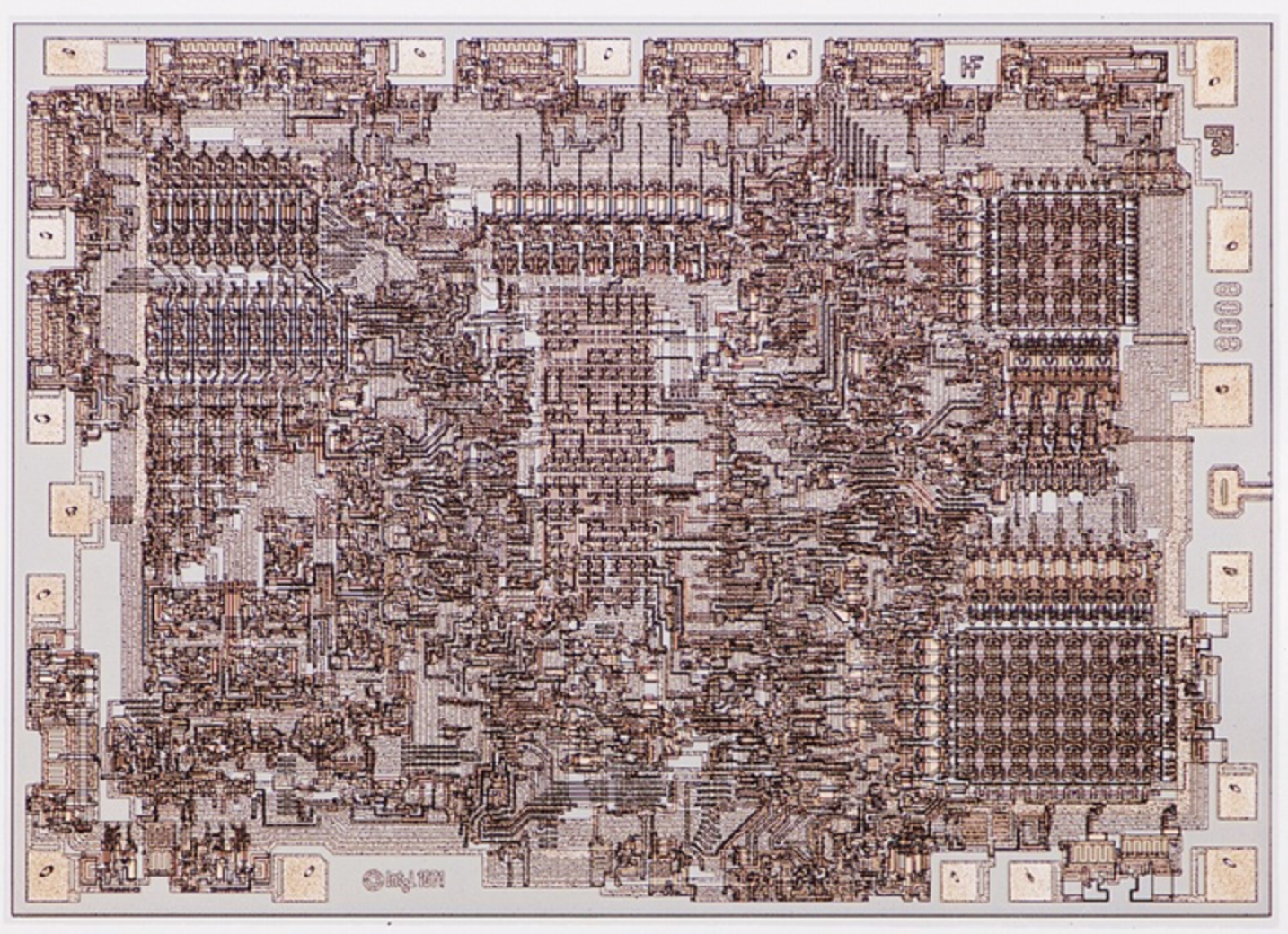
Intel 8008, the world’s first 8-bit microprocessor. Note the similarity of the layout of the 8008 with that of the 4004. Introduced in April 1972, the 8008 was packaged in an 18-pin package, could address 16 KB of memory and had an instruction cycle of 12 microseconds.
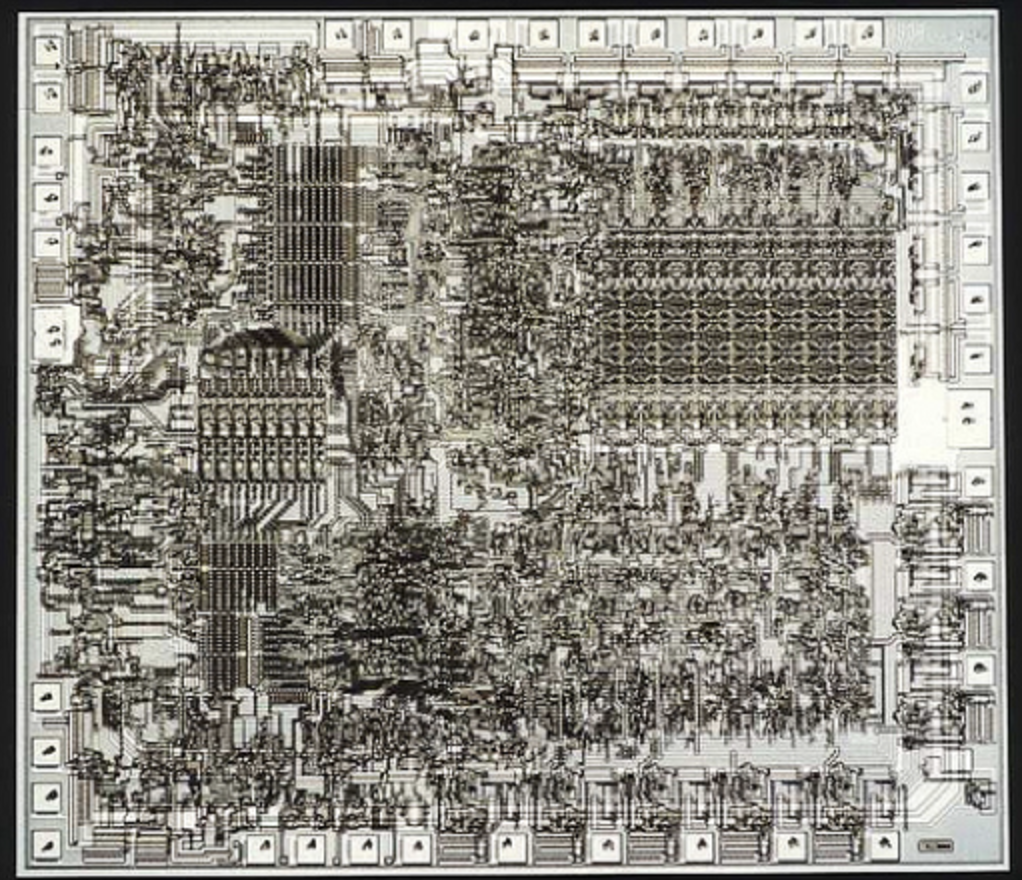
The Intel 8080, the world’s first second-generation 8-bit microprocessor. The 8080 employed N-channel MOS with SGT with two power supplies: +12 and +5 volt, making TTL compatibility much easier than possible with P-channel MOS. The 8080 registers used static, rather than dynamic memory, and the instruction cycle became 2 rather than 12 µsec!
1970
Intel 8008, the world’s first 8-bit microprocessor. Note the similarity of the layout of the 8008 with that of the 4004. Introduced in April 1972, the 8008 was packaged in an 18-pin package, could address 16 KB of memory and had an instruction cycle of 12 microseconds.
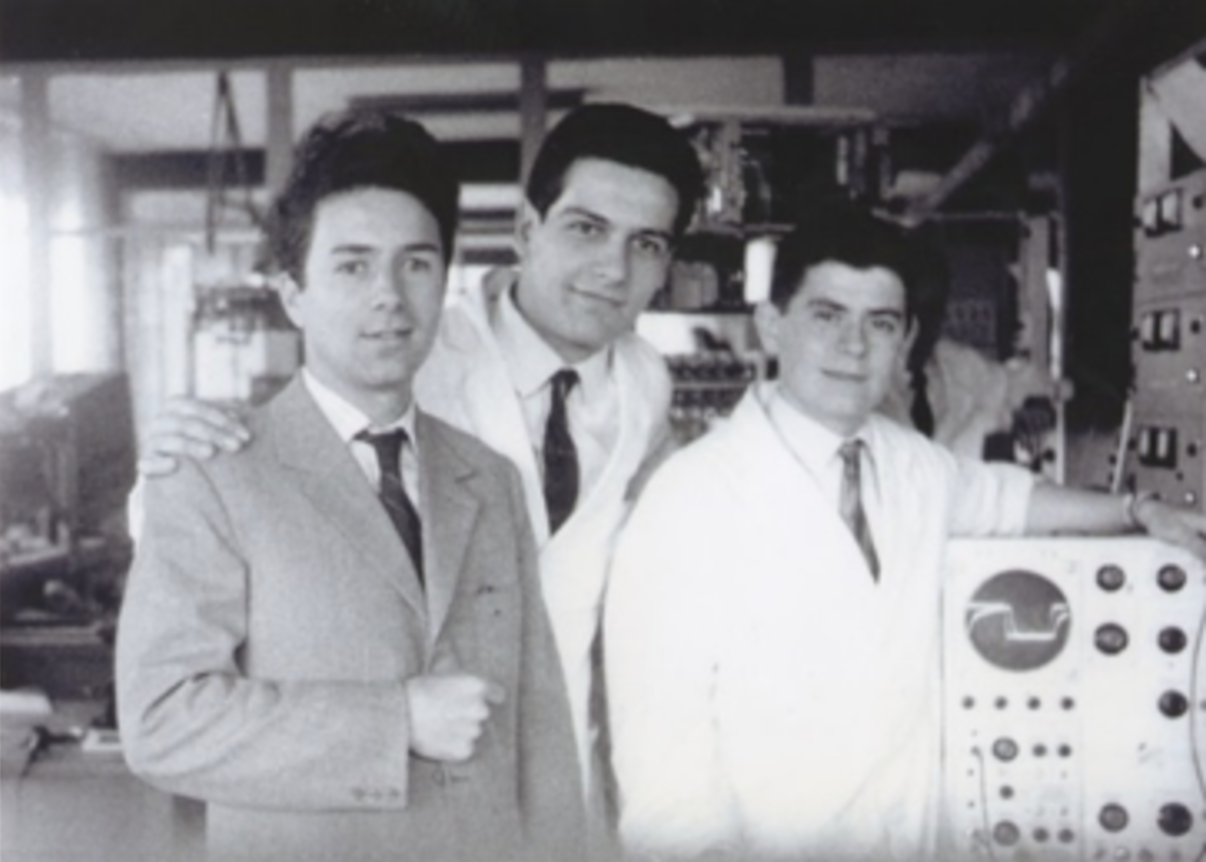
Federico (left) with the two electronic “periti” who worked with him.
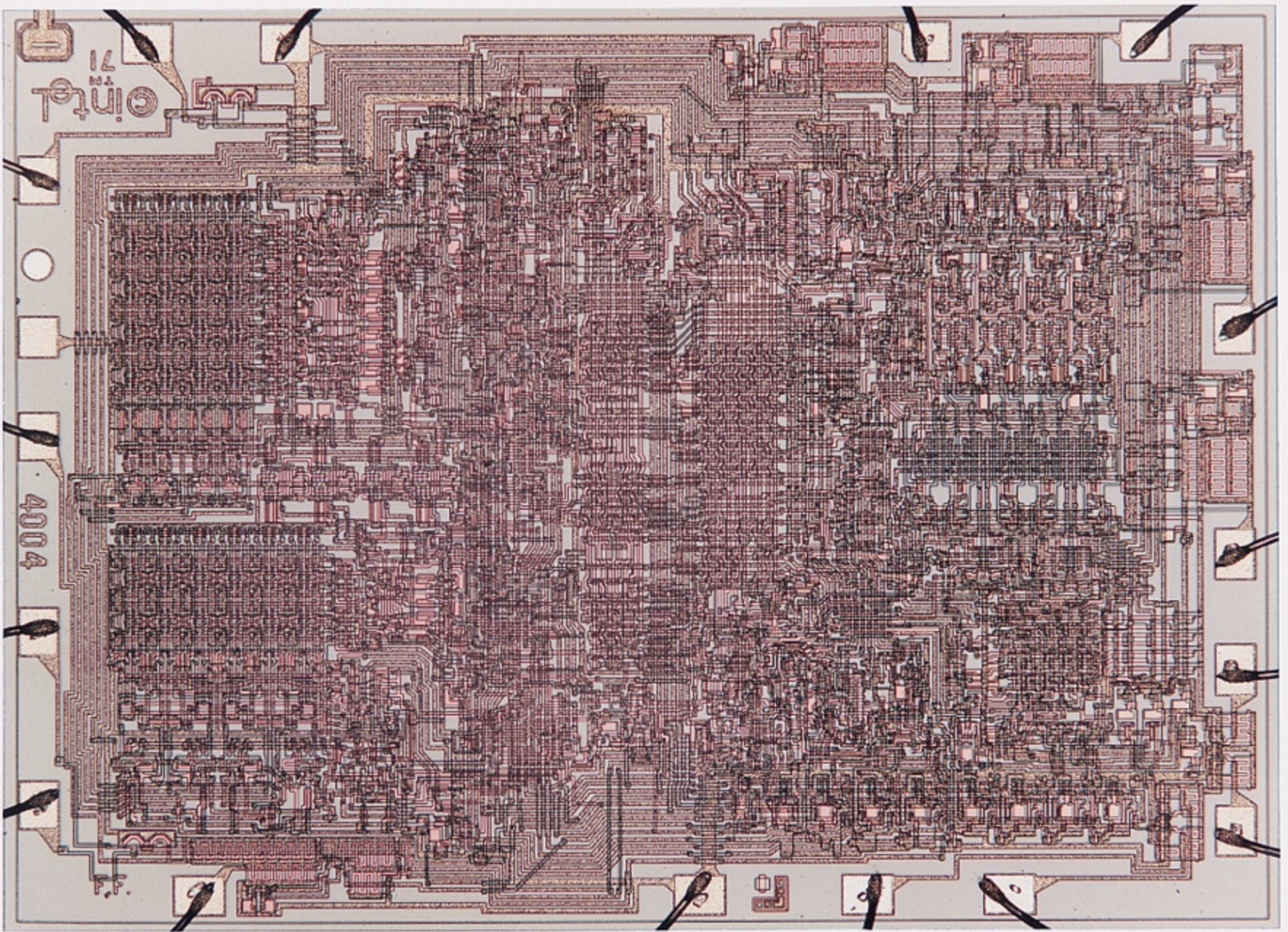
Magnification of the initials of Federico Faggin (F.F.) on the 4004.
1971
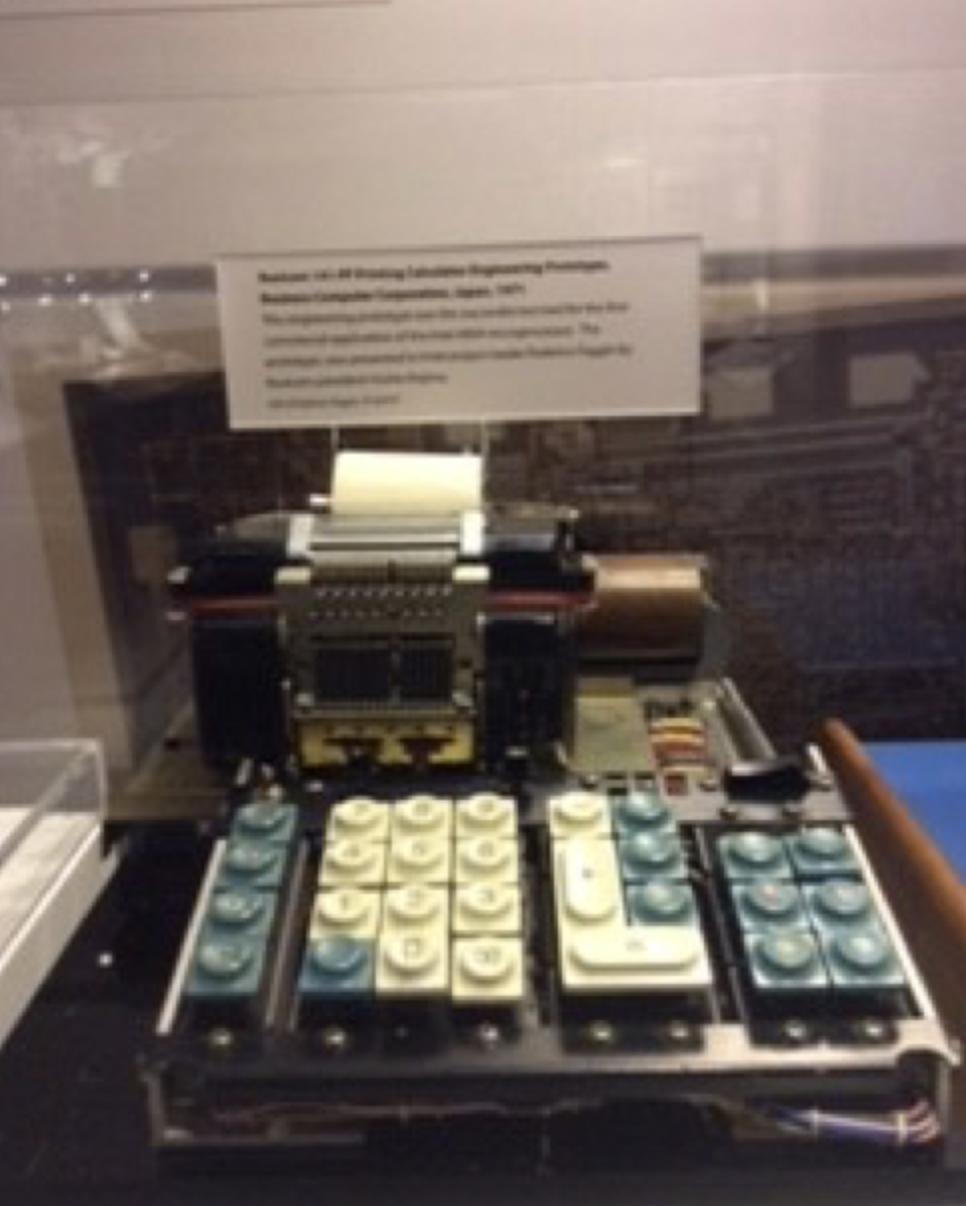
Busicom 141-PF Printing Calculator Engineering Prototype, Business Computer Corporation, Japan, 1971. This engineering prototype was the successful test bed for the first commercial application of the Intel 4004 microprocessor. The prototype, was presented to Intel project leader Federico Faggin by Busicom president Yoshio Kojima.
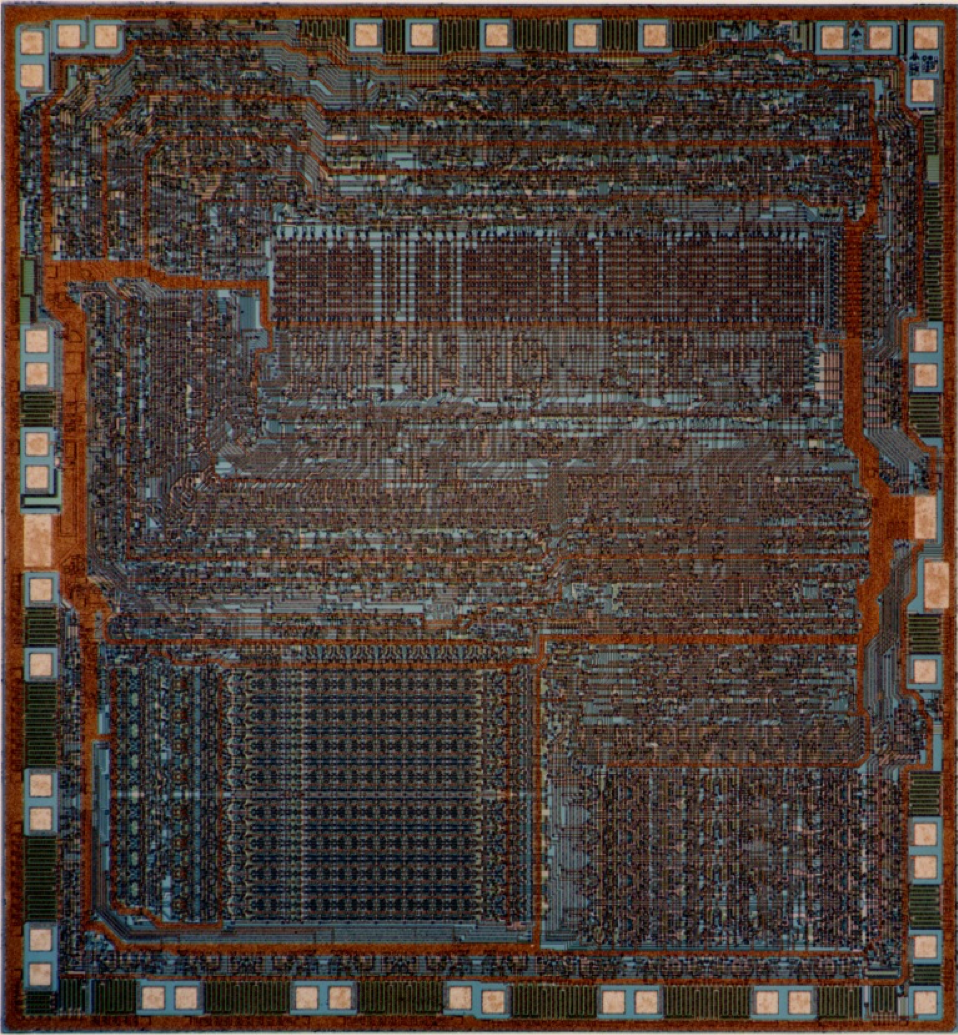
The layout of the Z80-CPU. Hand-drawn by Federico (by two thirds), the Z80 contained about 10,000 transistors and had an instruction cycle of 1 microsecond.
1976
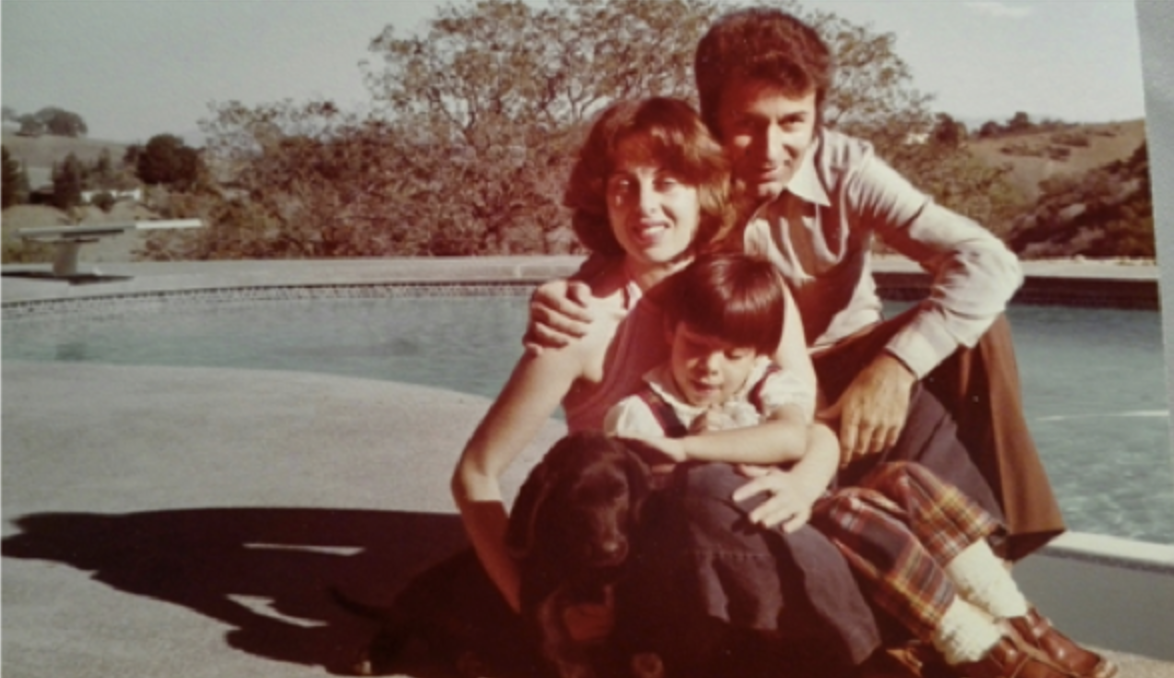
By the swimming pool of the new home in Los Altos Hills, CA.
1976
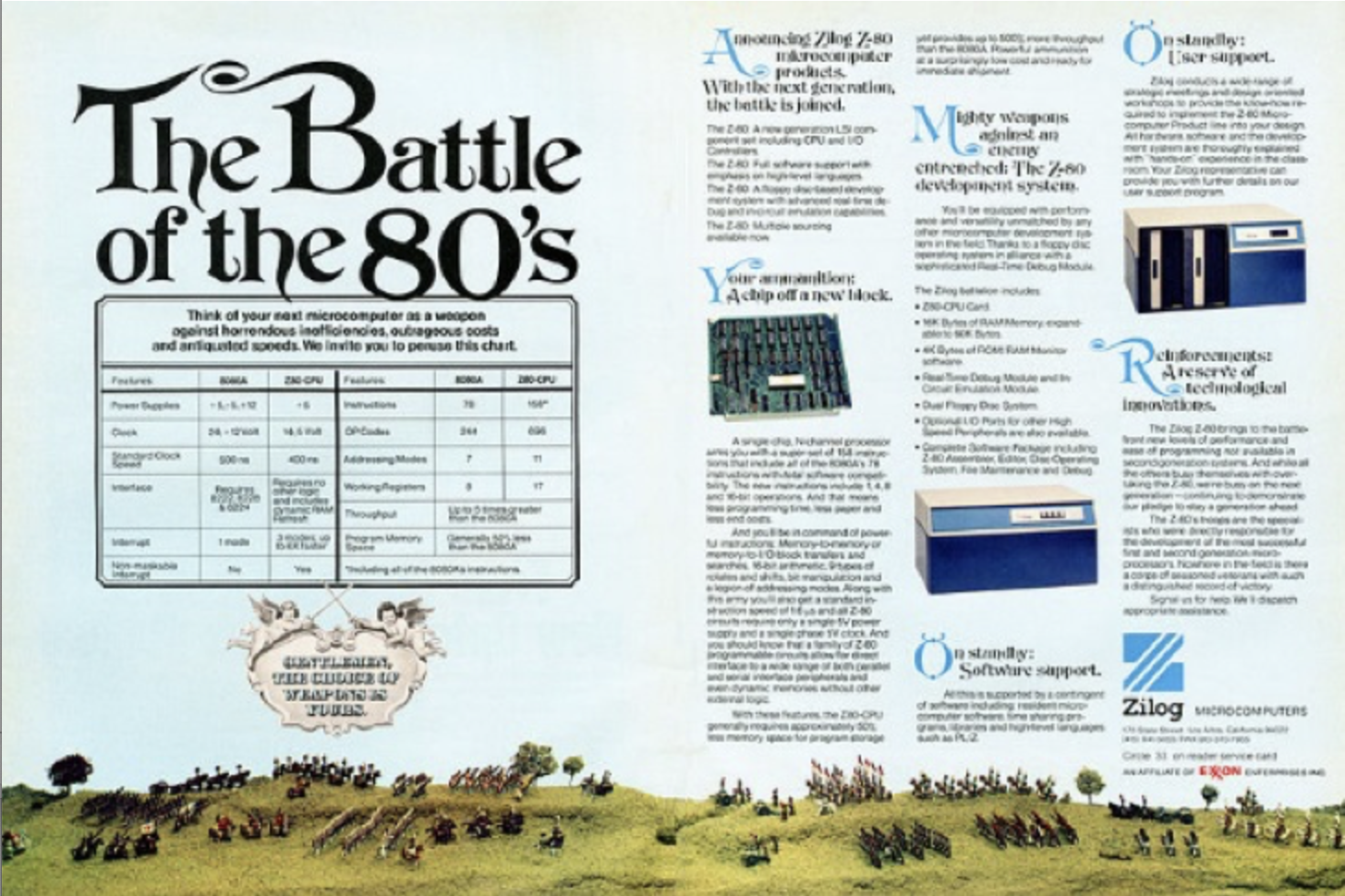
The first Zilog ad on the weekly Electronics News in May 1976. It shows a comparison between the Z80-CPU and the Intel 8080A.
1977
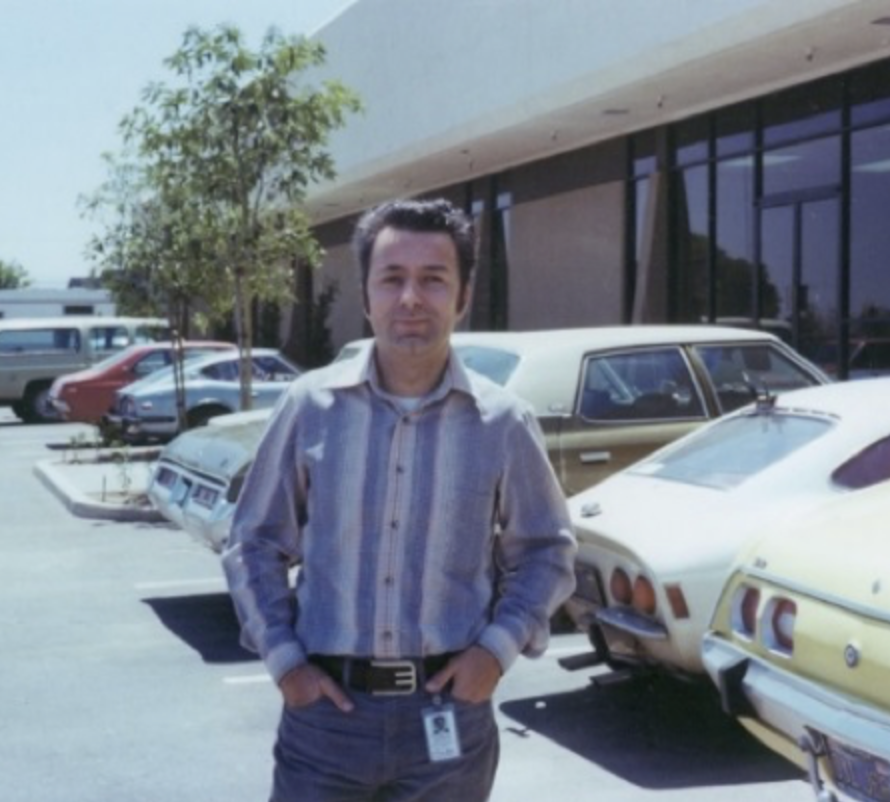
Federico in front of the first Zilog building at Bubb Road in Cupertino.

1977
This cover story featured Zilog and Exxon Enterprises. Already in December 1977, the article was giving a clear indication about the future of Zilog.
1978
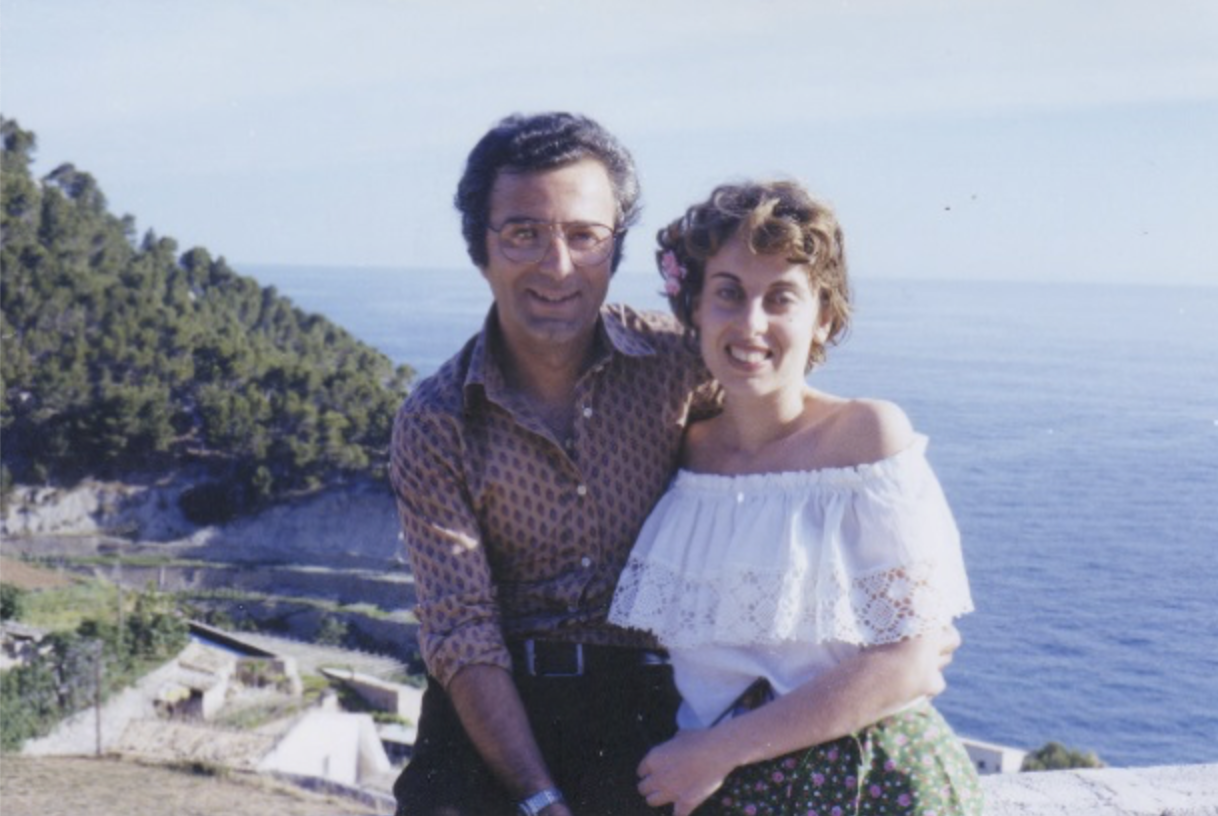
Federico and Elvia in a 1978 photograph in Palma de Mallorca, Spain, where the annual sales meeting of Zilog was held.

1979
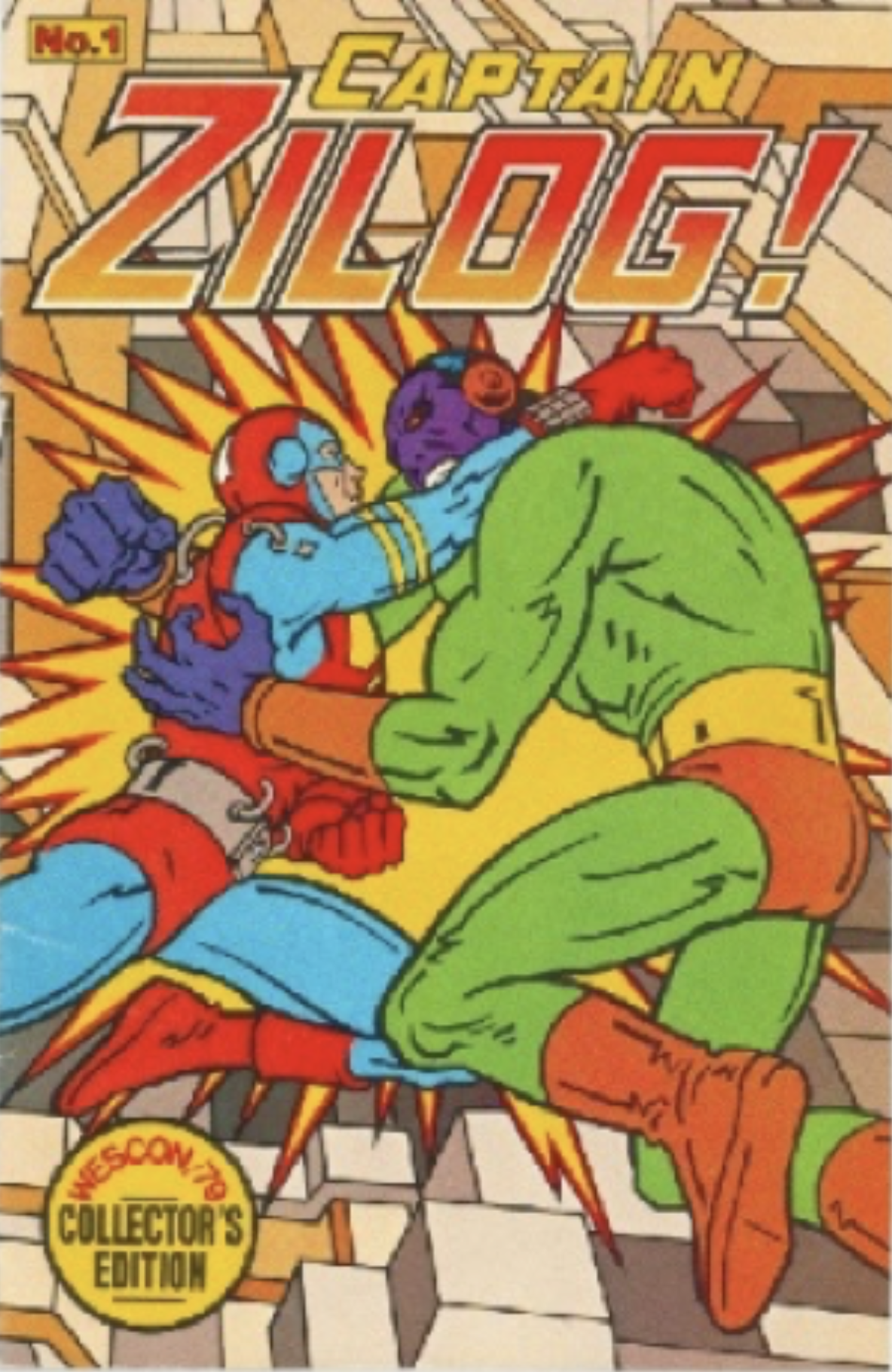
Captain Zilog with the new slogan adopted for the introduction of the Z8000: “The Fireworks Have Just Begun”.
1982
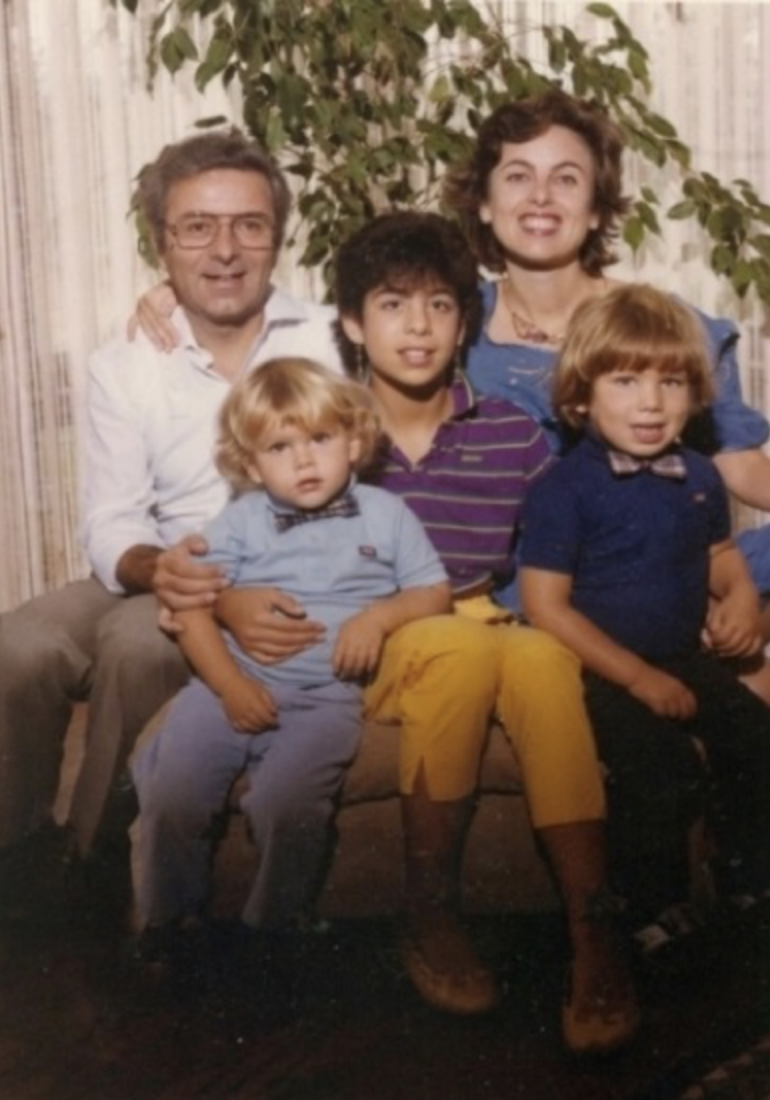
The Faggin family in 1982. Starting from the left: Eric, Marzia, and Marc.
1984
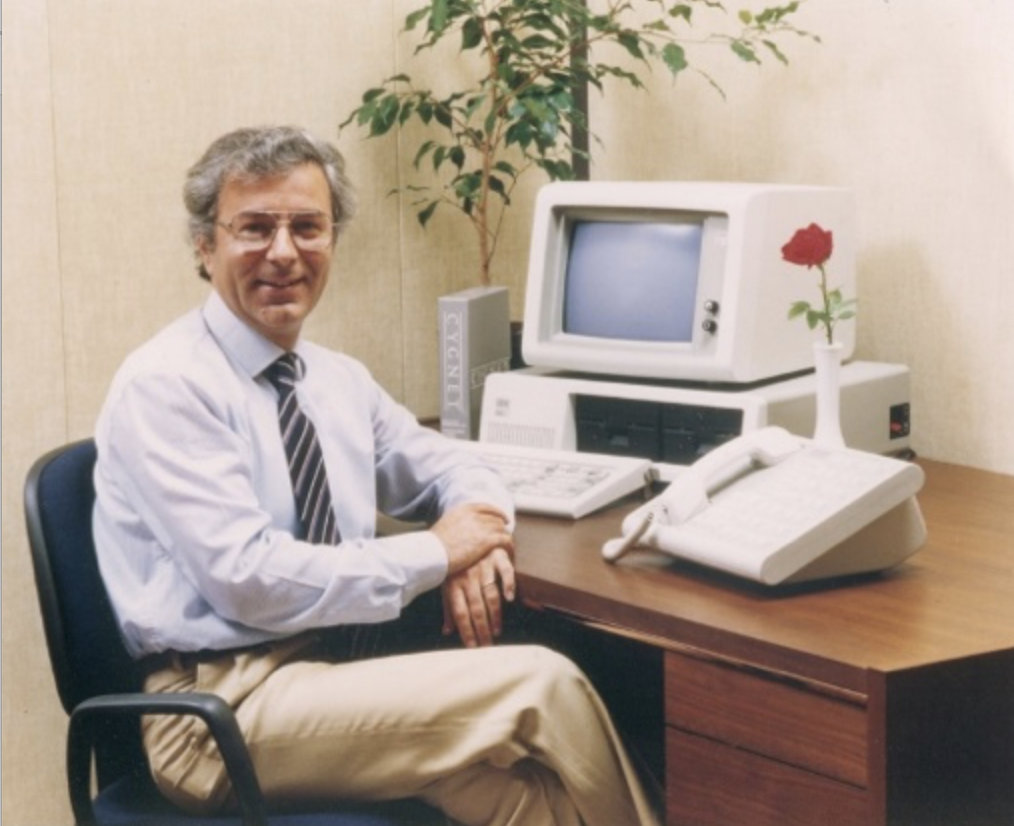
The Communication Cosystem, “the other half of the PC”, which managed the user’s voice and data communications, along with many personal productivity tools.
1989
An experimental neural network chip designed at Synaptics.
1997
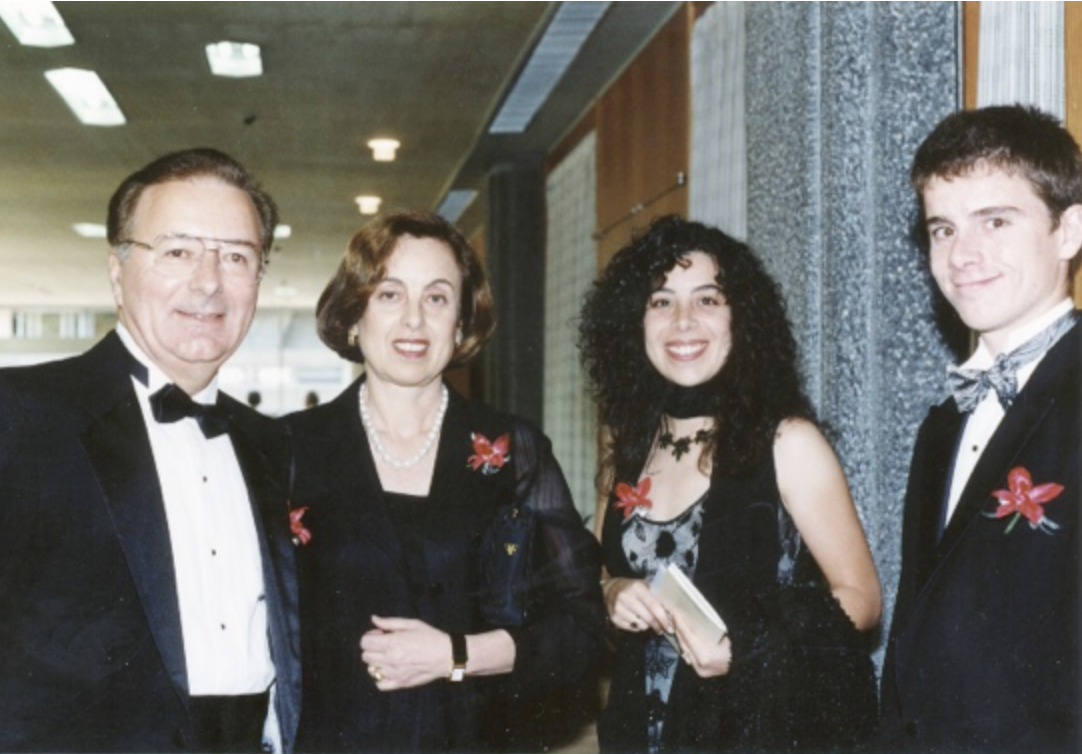
The Faggin family in Kyoto, Japan, in 1997 (Marc was absent to prepare for exams), in the occasion of awarding the prestigious Kyoto Prize to Federico .
2009
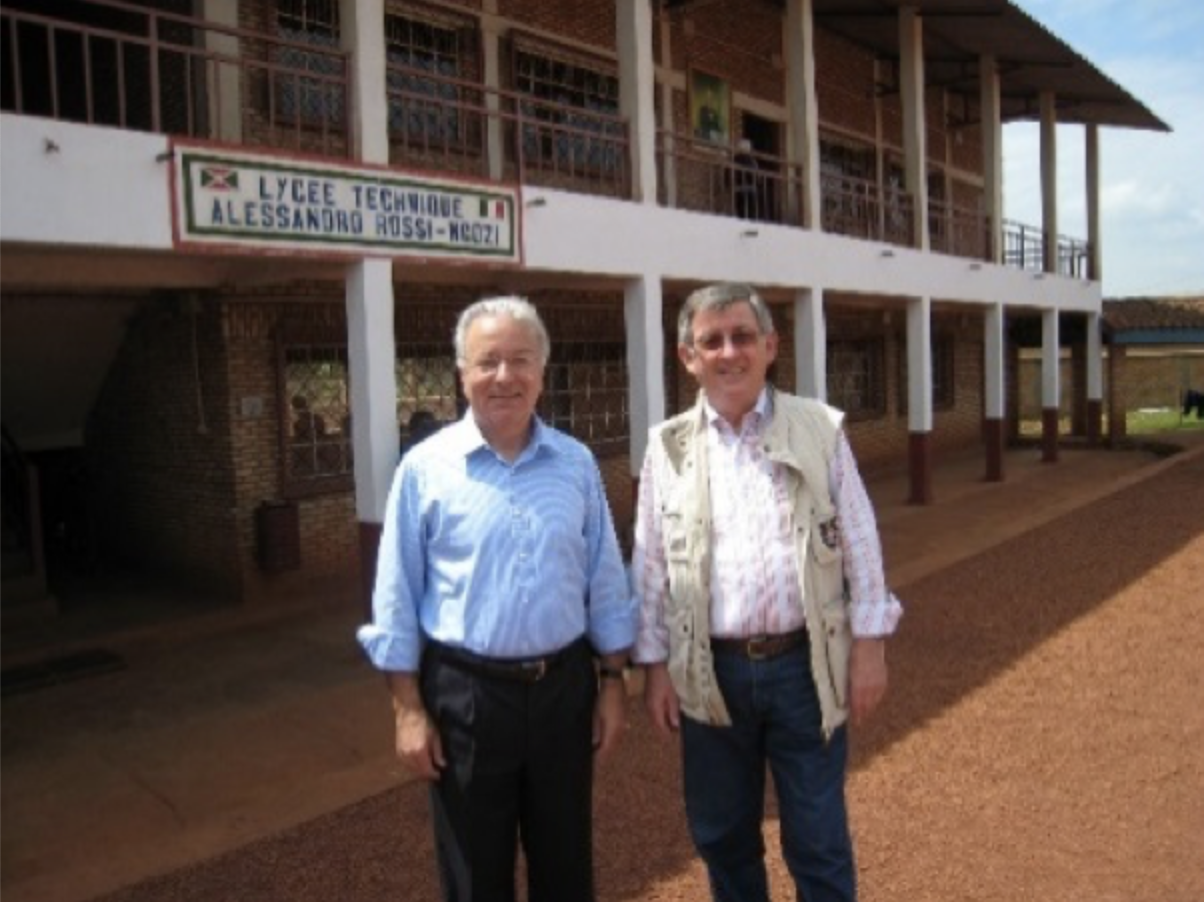
Federico Faggin, president of WITAR (World Technical Institutes Alessandro Rossi) e Pietro. Fox, vice president, at the inauguration of the Lycée Technique Alessandro Rossi in Ngozi, Burundi. Built by WITAR, the Lycée was gifted to the diocese of Ngozi.
2009
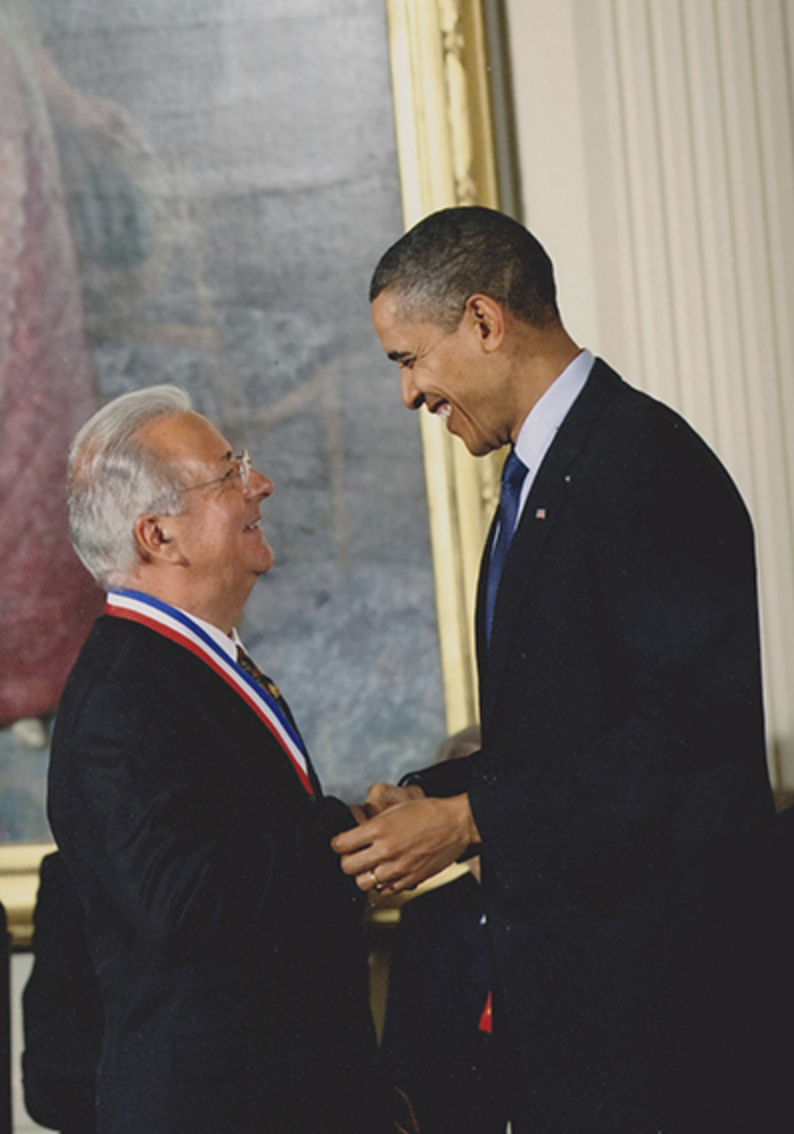
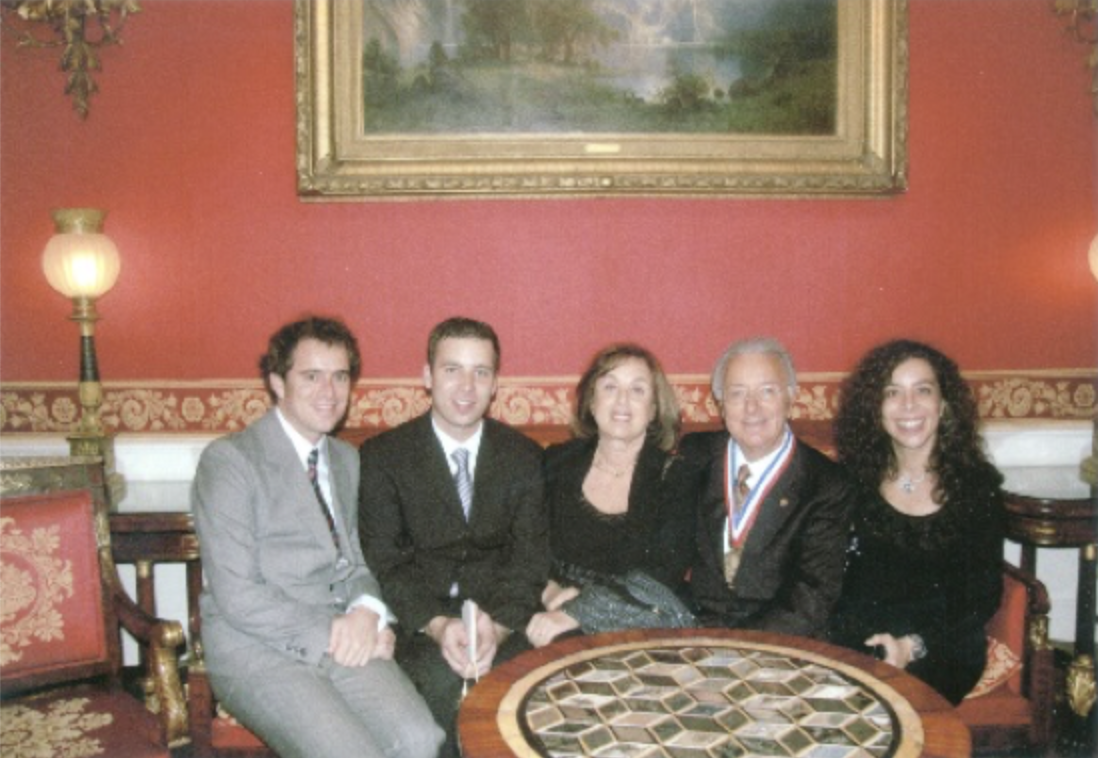
Federico receives the 2009 National Medal of Technology and Innovation, the highest honor conferred by the US government, from President Obama in a White House ceremony in October 2010.
2010
The Faggin family celebrates the awarding of the National Medal of Technology and Innovation to Federico at the White House.
2011
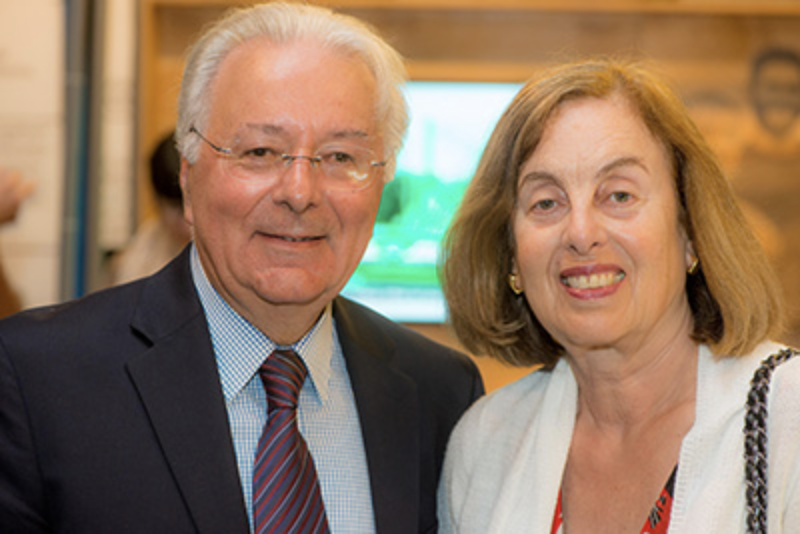
Federico and Elvia establish the Federico and Elvia Faggin Foundation
The foundation supports various programs at us universities and institutes to advance the understanding of consciousness through theoretical and experimental research.
2019
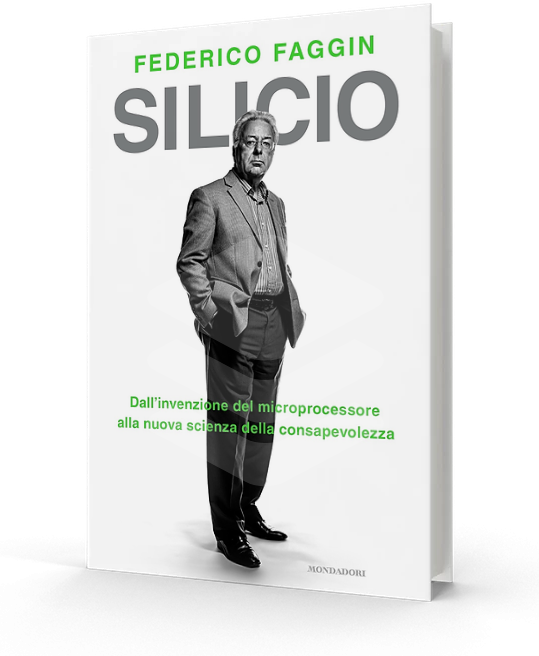
Federico Faggin’s autobiograpy “Silicio: Dall’invenzione del microprocessore alla nuova scienza della consapevolezza” was published by Mondadori. It has since recieved Oscar Bestselling status in Italy
2021
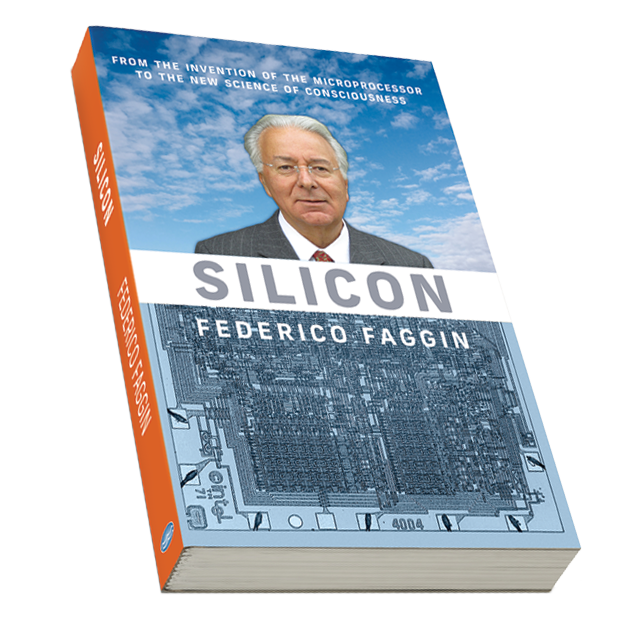
Federico Faggin’s autobiography “Silicon: From the Invention of the Microprocessor to the New Science of Consciousness” is published in English
2022
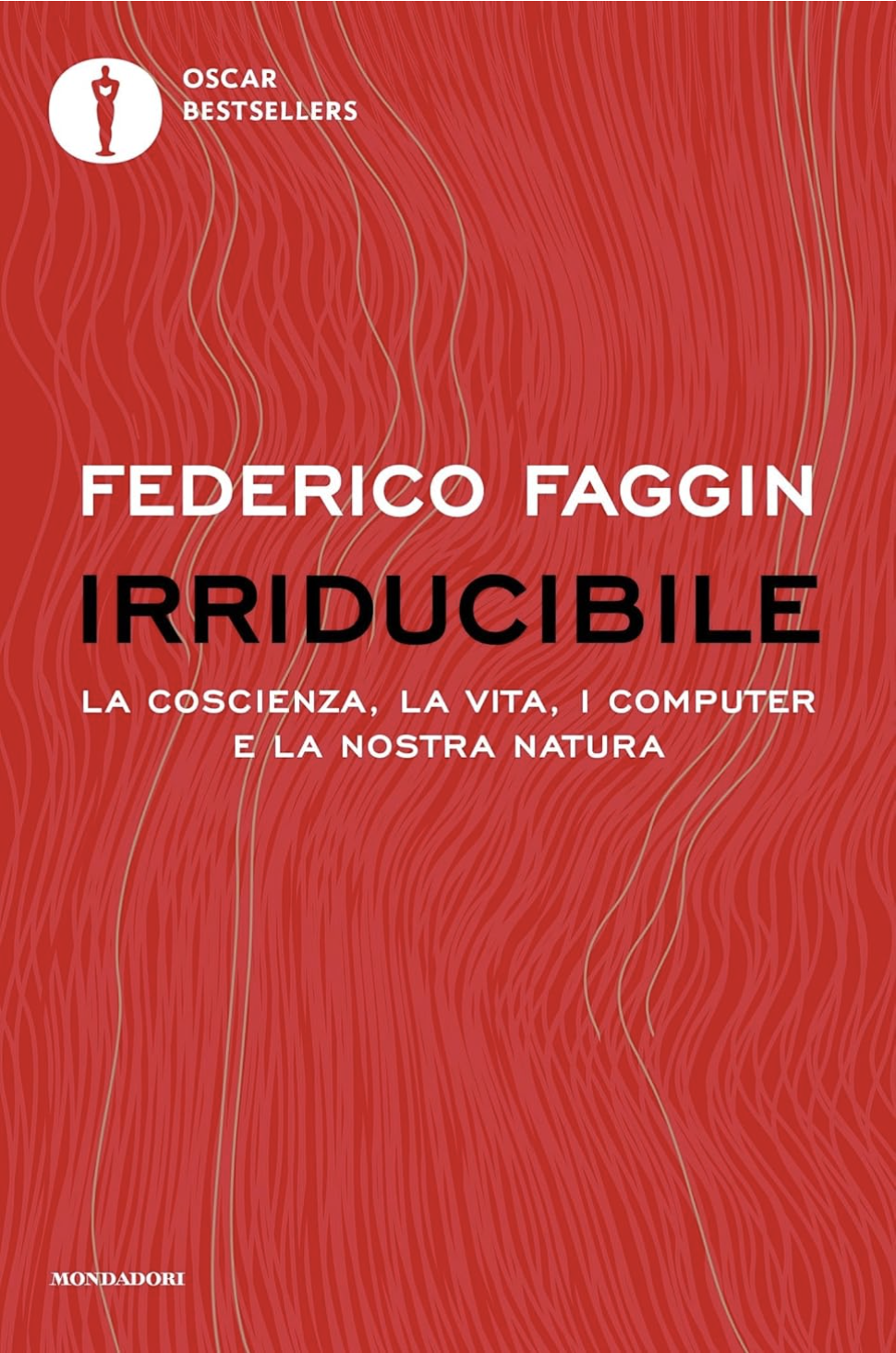
Federico’s second book “Irriducibile: La Conscienza, La Vita, I Computer E La Nostra Natura” is published my Mondadori in Italy and becomes an Oscar Bestseller.
2024
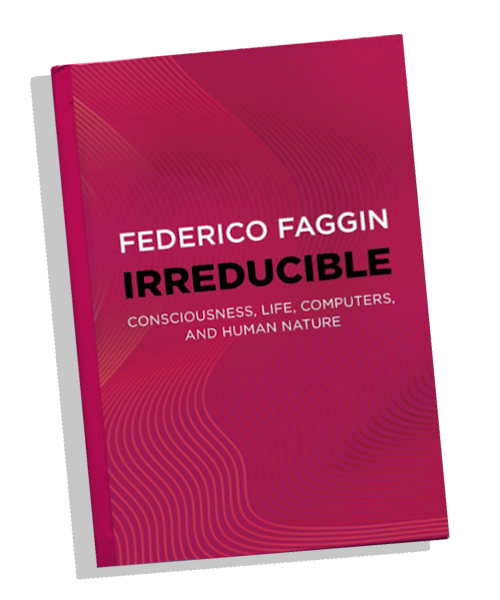
Federico’s second english language book “Irreducible: Consciousness, Life, Computers, and Human Nature” is published by Essentia Books.
2024
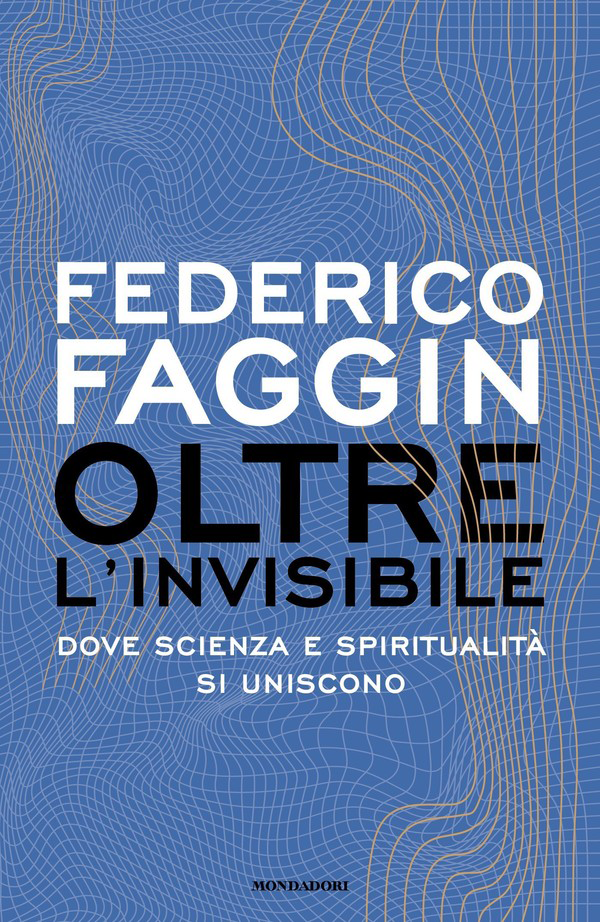
Federico’s third Italian book “Oltre L’Invisible: Dove Scienza e Spiritualità si Uniscono” is published by Mondadori
2024
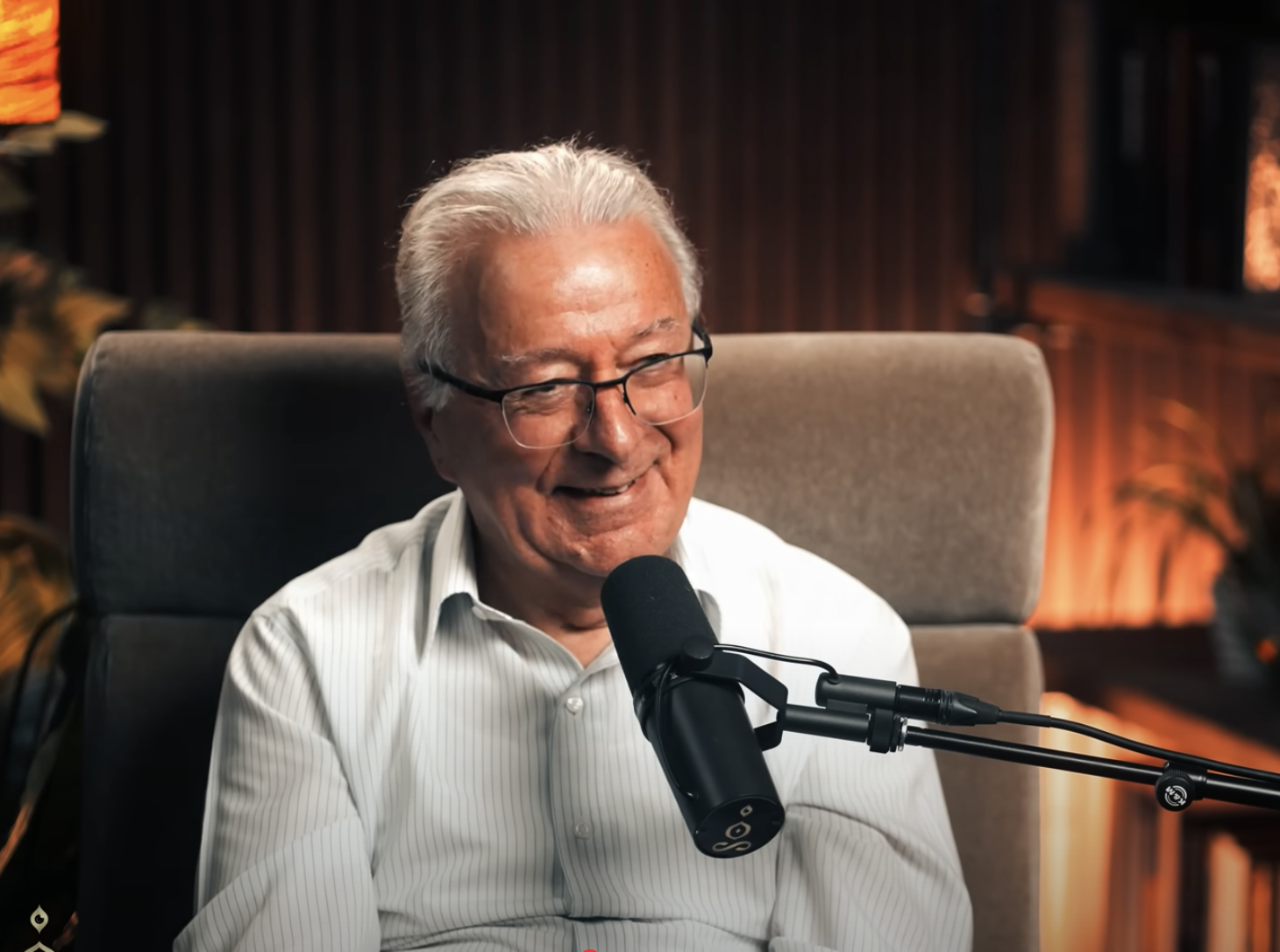
Federico lectures extensively throughout Europe and through virtual discussions. Recordings are available on ‘Videos’ tab.